Ten years ago, Laurel Hill’s agricultural program went dark. The longtime AG teacher retired, and despite the district’s efforts, no one with the required certifications could be found to take the helm. The labs sat quiet. The greenhouse went unused. Families who had long depended on agriculture as both a livelihood and a legacy felt the loss deeply. In a tight-knit rural community where farming anchors local identity and the regional economy, the absence of agriculture education left a gap students could feel and adults could not ignore.
Over the next decade, the call grew louder. Parents asked when ag classes would return. Farmers wanted students exposed to local career paths that kept the region strong. Teachers heard from middle schoolers eager to learn about animal systems, plant science, and the Future Farmers of America. Laurel Hill needed its agricultural program back, and the community made that need clear.
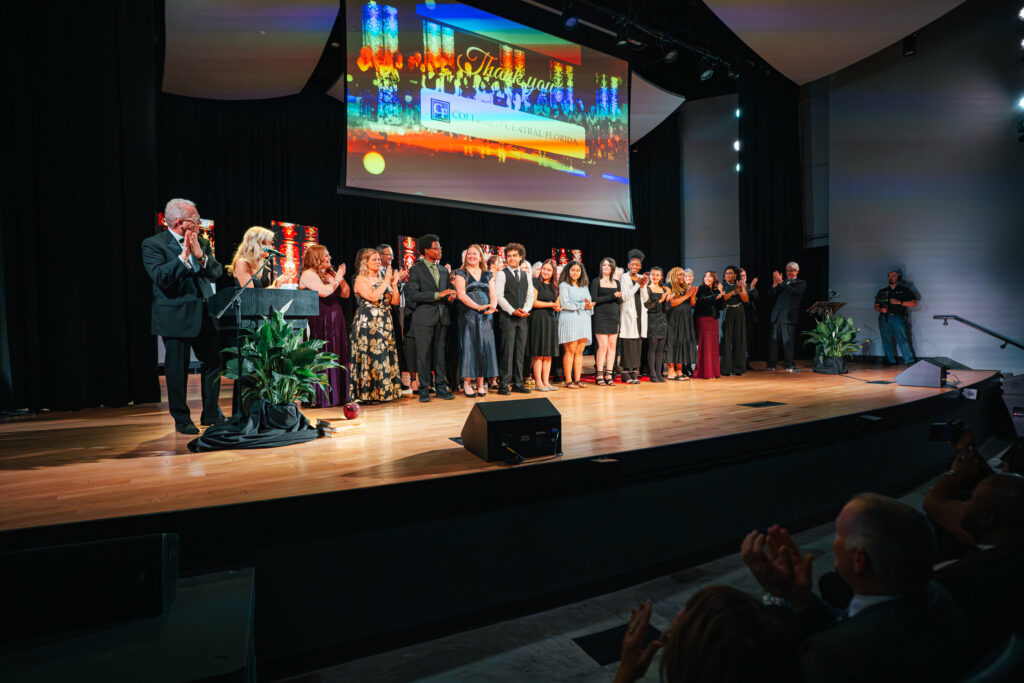
In 2024, that need met an opportunity. The Okaloosa Public Schools Foundation was selected as the inaugural recipient of a $100,000 competitive grant through the Career Catalyst Program, a partnership between the Consortium and the Frederick A. DeLuca Foundation. Designed to expand career pathway programs in rural and underserved communities, the investment is restoring agriculture education at Laurel Hill and positioning students for future-ready careers in one of Florida’s most essential industries.
The result is the Growing Laurel Hill Academy, a new agricultural education track that blends rigorous agriscience coursework with hands-on learning, modern equipment, and strong workforce connections. After a decade without an ag program, more than 80 students enrolled in the first year alone, from seventh graders taking introductory classes to high school students preparing for industry certifications that can lead directly to the workforce.
Randall Almond, the school’s first-year agriculture teacher, stepped forward to make the revival possible. He earned the necessary certifications, helped shape the academy, and quickly began building strong momentum. For Almond, the transformation is both instructional and deeply personal.
“This grant gave us the foothold we needed to restart agricultural education at Laurel Hill and rebuild a program the community had been asking for,” Almond said. “It has reopened a pathway for students to explore agriculture as a viable, local career.”
Students in the Foundations of Agriculture Science course are studying agriscience safety, environmental science, food safety, Florida agriculture, plant systems, and animal systems. In the spring, they will prepare for the Agriculture Associate Certification, a credential that signals workforce readiness for entry-level roles and provides a launch point for higher-level credentials in horticulture, animal science, or Agri-technology.
The academy’s early success goes well beyond classroom instruction. Through the grant, the school purchased a tractor and implements, giving students access to equipment they would encounter on farms or in agri-business settings. Almond has already introduced students to tool safety, tractor components, and the mechanics behind modern agricultural equipment. Meanwhile, students helped clean and prepare the school’s greenhouse for future use, with plans to bring it online by early spring once repairs are complete.
Partnerships are at the heart of the academy’s growth. Local farmers, many of whom have children in the program, are providing insight into workforce needs and emerging technologies. The school is collaborating with the Farm Bureau, regional agricultural affiliates, and other nearby schools that recently restarted their own ag programs. These relationships introduce students to potential employers, mentors, and role models while strengthening the region’s talent pipeline.
The Frederick A. DeLuca Foundation’s investment represents a strategic commitment to expanding career pathways in Florida’s rural communities. By partnering with the Consortium, the Foundation is helping ensure that students in places like Laurel Hill can access the skills, certifications, and career exposure needed to step into high-demand, high-wage industries—including agriculture, a sector vital to the state’s economic future.
As Almond sees it, the program’s impact reaches far beyond the classroom. “This program is more than a class. It strengthens leadership, builds technical skills, and helps students see themselves as part of the agricultural workforce that keeps our community thriving.”
With a projected enrollment goal of 120 students next year and certification estimates as high as 40 students in the first credentialing cycle, the academy is rapidly becoming a cornerstone of Laurel Hill’s future. It connects classroom learning to real workforce needs and helps ensure that Okaloosa County can grow its own agricultural talent — rooted in local values and ready for the industry’s next chapter.
For a rural community that once feared losing its agricultural identity, the Growing Laurel Hill Academy represents something much bigger than a program restart. It is a renewed promise to local families, a strategic investment in Florida’s workforce, and a reminder that when communities and partners come together, students gain the skills and confidence to thrive.